Pueblo’s summer heat puts extreme stress on air conditioning systems. With temperatures routinely exceeding 95°F from June through August and heat waves pushing past 105°F, your HVAC works harder here than in most American cities. Understanding how this heat impacts your system helps you prevent breakdowns and keep cooling costs manageable.
Why Pueblo Summers Are Uniquely Tough on AC Systems
Three factors combine to create a perfect storm for HVAC stress in our region. First, the sheer temperature—Pueblo averages 62 days per year above 90°F. Second, our 4,692-foot elevation means thinner air, which reduces heat transfer efficiency at the condenser coil by roughly 10–15%. Third, the intense UV radiation at altitude degrades exposed refrigerant lines and electrical wiring faster than at sea level.
The result? An AC system in Pueblo works about 20% harder to produce the same cooling as an identical unit installed in Kansas City or Dallas. That extra workload accelerates component wear and shortens lifespan unless you compensate with better maintenance practices.
How Heat Waves Push Systems Past Their Limits
During a typical Pueblo heat wave, outdoor temperatures stay above 100°F for three to five consecutive days. Here’s what happens inside your AC during these events:
- Compressor overheating — The compressor works nonstop and ambient heat prevents adequate cooling of the motor. Internal temperatures climb until the thermal overload switch trips, shutting the system down temporarily.
- Refrigerant pressure spikes — High outdoor temperatures increase head pressure in the refrigerant lines. Systems running low on charge due to small leaks fail faster under these conditions.
- Condenser coil inefficiency — When outdoor air is 105°F, the temperature difference between the refrigerant and the air shrinks, dramatically reducing the coil’s ability to reject heat.
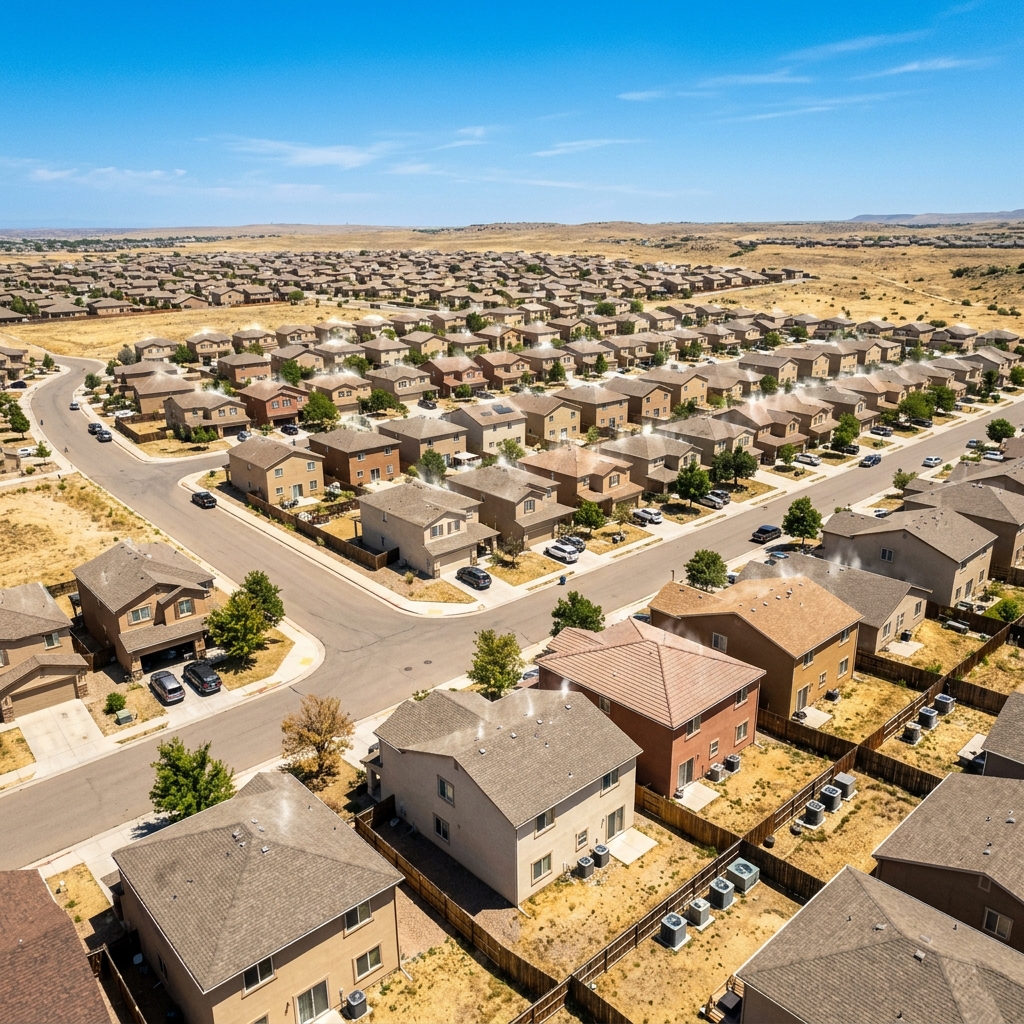
Homeowners in East Side Pueblo and the Mesa Junction area often feel these effects most intensely because many homes there have older HVAC equipment and less attic insulation.
Protecting Your System During Extreme Heat
Pre-Season Maintenance Is Non-Negotiable
Schedule your annual AC tune-up in April or May—before the rush hits. A proper inspection includes refrigerant charge verification, capacitor testing, condenser coil cleaning, and electrical connection tightening. These steps alone can prevent 80% of summer breakdowns.
Keep the Area Around Your Condenser Clear
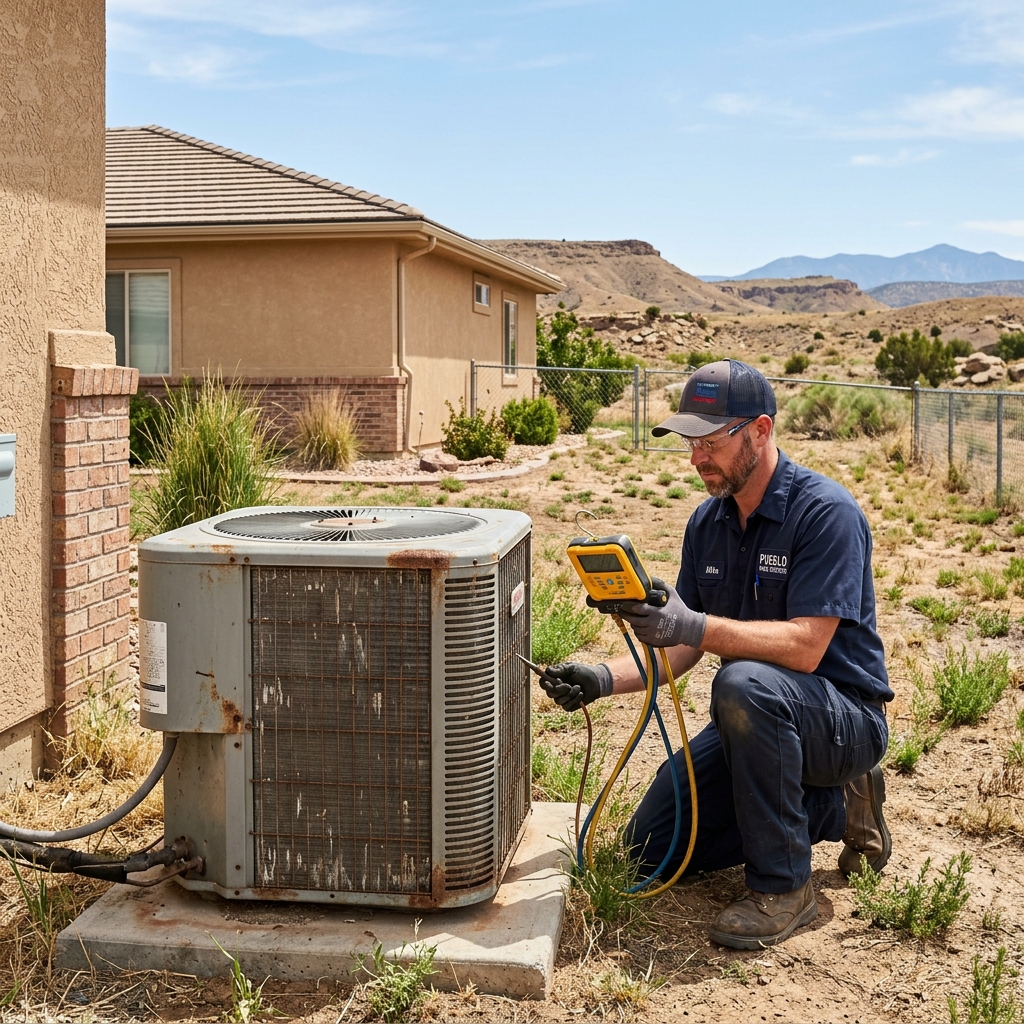
Maintain at least 24 inches of clearance around your outdoor unit. Trim back any vegetation, remove debris, and never stack anything against the unit. In dusty areas like Pueblo West, hose down the condenser coils monthly during summer.
Manage Your Thermostat Strategically
Set your thermostat no more than 20 degrees below the outdoor temperature. On a 105°F day, expecting your home to reach 70°F pushes the system beyond its design capacity. Setting it to 78°F is realistic and keeps the system running efficiently. A smart thermostat can pre-cool your home in the early morning when electricity rates and outdoor temperatures are lower.
Supplement with Ceiling Fans
Running ceiling fans lets you raise the thermostat 3–4°F without noticing any comfort difference. That translates to roughly 10% lower cooling costs across the summer.
When to Call for Help
Don’t wait for a complete failure during a heat wave. If you notice warm air from the vents, ice forming on the refrigerant lines, frequent cycling, or unusual noises, call for AC repair immediately. During extreme heat events, we see a 300% increase in service calls, and wait times can stretch to 24+ hours. Homeowners who maintain their systems rarely end up in that queue.
If your system is older than 12 years and struggling through summers, consider a proactive AC replacement before the next heat season arrives.
Frequently Asked Questions
Most residential AC systems are designed to maintain a 20-degree differential from outdoor temperature. On a 105°F day, keeping your home at 78–80°F is realistic. Pushing below that causes the system to run continuously and can lead to compressor damage.
Raise the thermostat 5–7 degrees when you leave rather than turning it off completely. Your home absorbs heat quickly in Pueblo’s sun, and the system will struggle to recover from 90°F indoor temperatures. A programmable thermostat handles this automatically.
In Pueblo’s dusty conditions, check filters monthly and replace them every 30–60 days during summer. Standard 1-inch filters clog faster here than manufacturers anticipate.
Absolutely. Shading the condenser unit can improve efficiency by up to 10%. Just maintain clearance for airflow. Shading west-facing windows reduces indoor heat gain significantly too.
Low humidity makes evaporative cooling more effective but increases dust accumulation on coils. It also means less moisture for the evaporator to remove, so sensible cooling demands are higher. Overall, it’s a mixed effect that favors well-maintained systems.