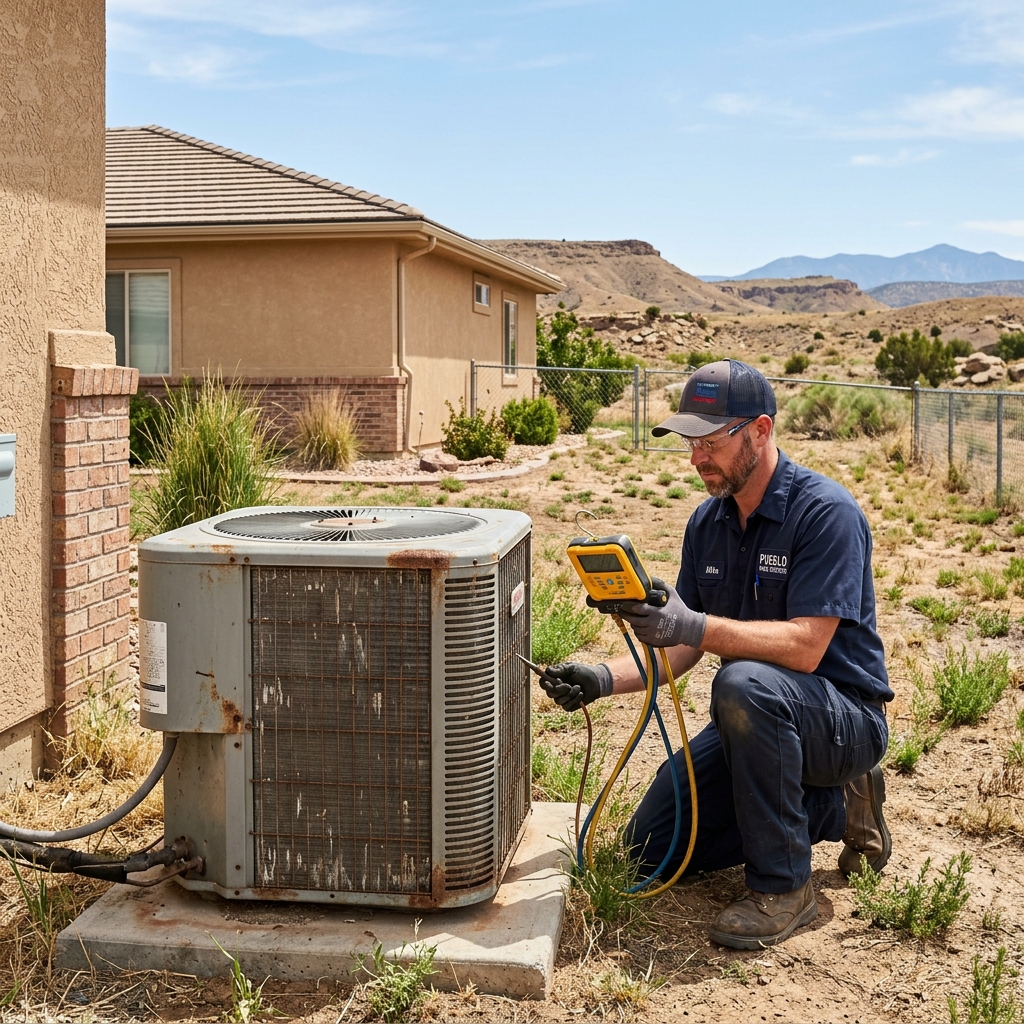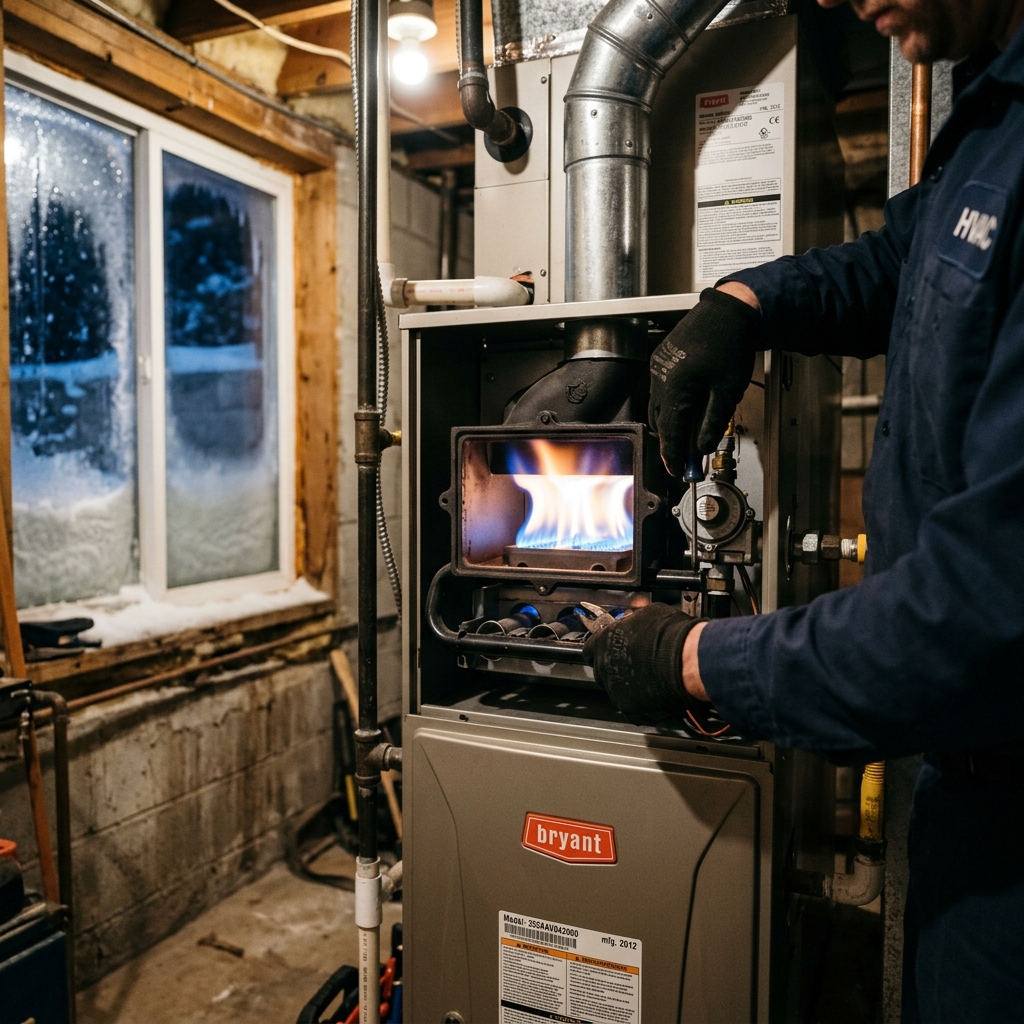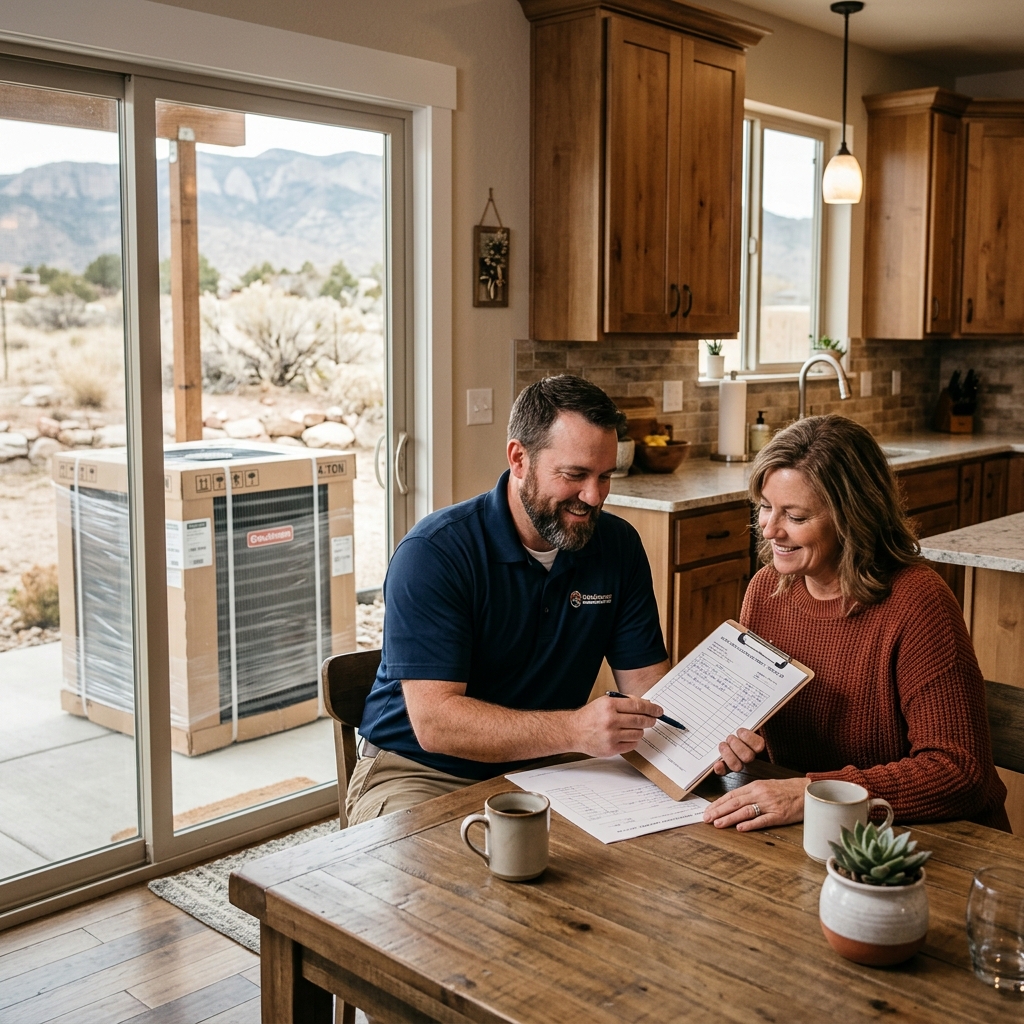
A full HVAC replacement in Pueblo CO typically costs between $7,500 and $18,000, depending on system type, size, and efficiency rating. A standalone AC replacement runs $4,500–$9,000, while a furnace-only swap falls between $3,500–$8,000. These numbers reflect real 2026 pricing from licensed Pueblo contractors, not national averages that don’t account for our altitude and climate considerations.
What Drives the Cost in Pueblo?
System Size and Capacity
Home size is the biggest factor. A 1,200-square-foot ranch in the Mesa Junction neighborhood needs a 2.5-ton AC system, while a 2,800-square-foot home in Pueblo West requires 4–5 tons. Bigger systems cost more—both the equipment and the labor to install them.
But sizing isn’t just about square footage. Our altitude means air is 15% less dense, affecting heat transfer calculations. A proper Manual J load calculation accounts for insulation levels, window orientation, ceiling height, and local climate data. Oversizing wastes money upfront and creates humidity and comfort problems. Undersizing means the system runs constantly and wears out prematurely.
Efficiency Ratings
Higher-efficiency equipment costs more but delivers lower operating costs over its lifetime:
- Standard AC (15–16 SEER2): $4,500–$6,500 installed
- High-efficiency AC (18–20 SEER2): $6,500–$9,000 installed
- Standard furnace (80% AFUE): $3,500–$5,000 installed
- High-efficiency furnace (96%+ AFUE): $5,000–$8,000 installed
- Heat pump system (dual fuel): $8,000–$15,000 installed
For most Pueblo homeowners, a 16 SEER2 AC paired with a 96% AFUE furnace hits the sweet spot between upfront cost and long-term savings.
Ductwork Condition
If your existing ductwork is undersized, damaged, or poorly sealed, it needs attention during replacement. We see this frequently in older homes across Downtown Pueblo and the North Side where original ducts from the 1960s and 1970s are still in service. Duct modifications can add $1,500–$4,000 to the project but are critical for the new system to perform at its rated capacity.
Installation Complexity
A straightforward swap on a ground-level system with easy access costs less than installing in a tight attic, relocating equipment, or converting from one fuel type to another. Homes switching from electric baseboard to central forced air will be on the higher end of the range.
The Hidden Costs of Delaying Replacement
Putting off an inevitable replacement isn’t free. An aging system running at 60% of its original efficiency on a $200/month utility bill wastes roughly $80 each month in excess energy costs. Over two years of delay, that’s $1,920 in avoidable expenses—plus the risk of an emergency breakdown on the coldest night of the year when emergency rates and limited technician availability drive costs even higher.
Making It Affordable
Most Pueblo HVAC contractors offer financing that breaks the cost into manageable monthly payments. Common options include:
- Same-as-cash plans (12–18 months interest-free)
- Low-interest fixed-rate loans (60–120 months)
- Manufacturer rebates on qualifying high-efficiency equipment
- Utility company rebates through Black Hills Energy
Frequently Asked Questions
Yes, when possible. Matched systems operate at peak efficiency, share a single warranty timeline, and the labor cost for simultaneous installation is lower than two separate jobs. Mismatched components reduce efficiency by 15–30%.
Spring and fall are the best times. Demand is lower, contractors have more flexibility on scheduling, and you may find better deals. Avoid mid-summer and mid-winter when emergency replacements drive prices up and availability down.
Yes. Pueblo County requires a mechanical permit for HVAC installations. A licensed contractor handles this as part of the project. The permit ensures the work meets code and passes inspection, which protects your investment and home insurance coverage.
A standard like-for-like replacement takes one day. Projects requiring ductwork modifications, electrical upgrades, or fuel conversions may take two to three days. We always discuss the timeline before starting work.
Not automatically. The “best” system depends on how long you plan to stay in the home, your current energy costs, and your comfort priorities. We calculate the payback period for each option so you can make an informed decision based on your specific situation.