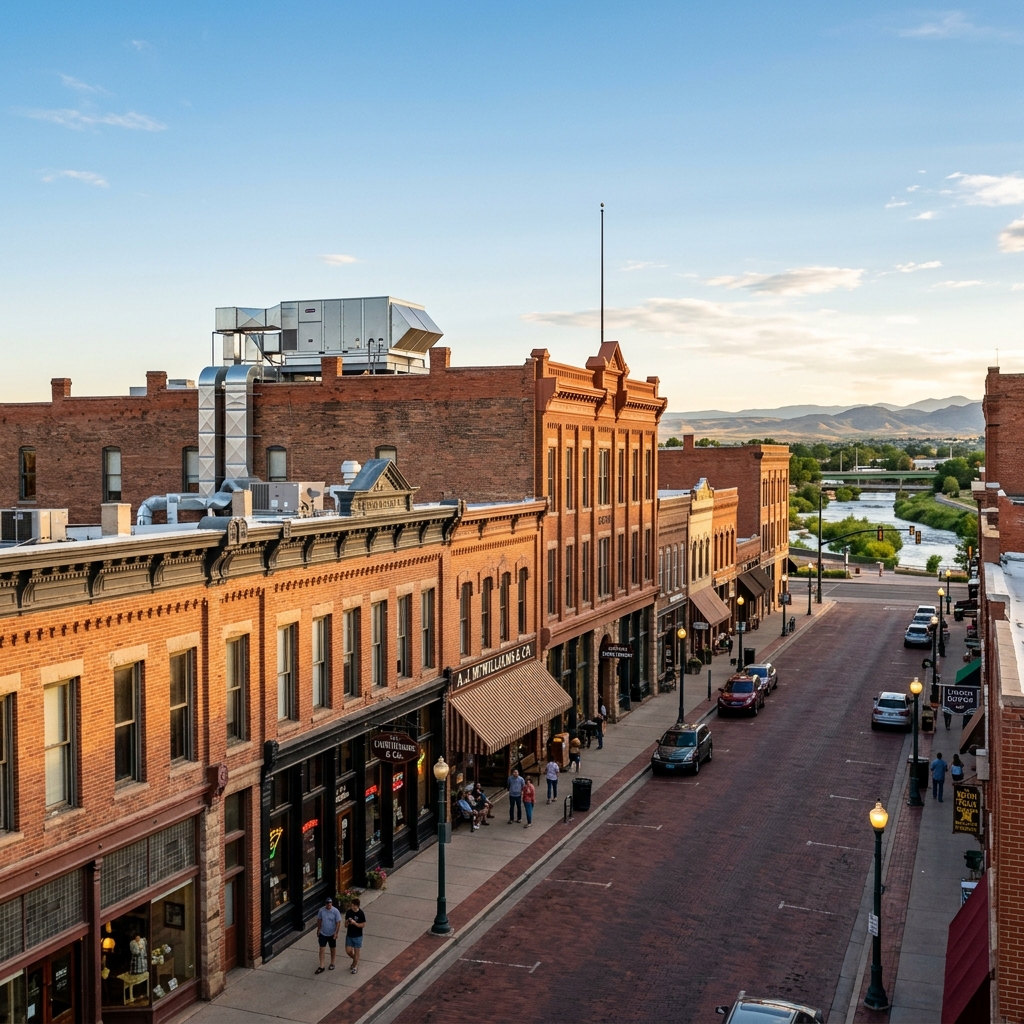
Downtown Pueblo’s mix of historic brick buildings, converted lofts, and modern commercial spaces creates HVAC challenges you won’t find in suburban neighborhoods. From century-old structures without ductwork to restaurants needing high-capacity ventilation, servicing the Union Avenue district and surrounding blocks demands specialized knowledge that not every contractor has.
Unique HVAC Challenges in Downtown Pueblo
Historic Buildings Without Ductwork
Many buildings along Union Avenue and Main Street were constructed in the early 1900s when heating meant radiators and coal boilers. These structures have thick brick walls (great insulation) but no space for conventional ductwork. Retrofitting central air into a three-story brick building without destroying historical character requires creative solutions.
Ductless HVAC systems are the go-to solution for these properties. Wall-mounted indoor units connect to a single outdoor compressor, providing both heating and cooling without cutting into walls or ceilings for duct runs. Each unit operates independently, giving tenants in multi-unit buildings individual temperature control.
Mixed-Use Buildings
Downtown Pueblo has seen a resurgence of mixed-use buildings—retail or restaurant on the ground floor, residential lofts above. These spaces need completely separate HVAC zones because a restaurant kitchen generates massive heat loads while the apartment upstairs needs moderate cooling. A shared system simply can’t balance both demands.
We typically recommend independent mini split systems for each unit, with separate controls and separate utility metering. This approach keeps costs fair for each occupant and allows the restaurant to run high-capacity exhaust and makeup air systems without affecting residential comfort.
Commercial Kitchen Ventilation
Pueblo’s thriving restaurant scene downtown means commercial kitchen ventilation is in constant demand. Code requires exhaust hoods over cooking equipment with adequate makeup air to prevent negative building pressure. Improperly balanced systems pull unconditioned air through every crack and door, making the dining room impossible to cool in summer.
Residential HVAC in Nearby Neighborhoods
The neighborhoods immediately surrounding downtown—Bessemer to the south, the East Side, and the North Side—have their own characteristics that affect HVAC service.
Bessemer features many homes from the 1940s through 1960s with original floor furnaces and window AC units. These homes benefit enormously from upgrading to a modern central system with proper duct design and a high-efficiency furnace installation.
North Side homes near the university area often house students and renters, creating demand for affordable, reliable systems that can handle the cycling of multiple tenants. Landlords in this area prioritize durability and ease of maintenance.
East Side residences range from historic Victorian-era homes to mid-century ranches. The Victorian homes present the same ductwork challenges as downtown commercial buildings, making ductless solutions particularly attractive.
Finding the Right Downtown HVAC Contractor
Not every HVAC company is equipped to work in downtown environments. Look for contractors who:
- Have experience with ductless systems and historic building retrofits
- Carry proper insurance for commercial and multi-story work
- Understand Pueblo building codes for commercial occupancies
- Can provide references from other downtown business owners
- Offer maintenance contracts that include regular air quality inspections
Frequently Asked Questions
While traditional ductwork is usually impractical in historic buildings, high-velocity mini-duct systems use 2-inch flexible tubing that can be threaded through existing walls and ceilings. Ductless mini splits are the more common and less invasive option.
Pueblo follows the International Mechanical Code, requiring commercial kitchen exhaust hoods, adequate makeup air systems, and proper fire suppression integration. Restaurants need regular inspections to maintain compliance and keep their operating permits valid.
Ceiling fans set to downdraft mode push heated air back to living level. Radiant floor heating is another excellent option for loft spaces. A ductless unit mounted high on the wall with a strong downward airflow pattern also works well for tall ceiling spaces.
It depends on usage. If the commercial space has standard office heat loads, a single well-designed system can handle both. If it involves cooking, manufacturing, or high-occupancy retail, separate systems are recommended for comfort and code compliance.
Yes. Colorado offers state historic preservation tax credits for qualifying rehabilitation projects, which can include HVAC upgrades in designated historic structures. Federal historic tax credits may also apply. Consult with a tax professional familiar with historic property incentives.